skin that finally
feels like yours.
Stop trial-and-erroring your face. In 90 seconds, find the people with skin exactly like yours — and what actually worked for them.
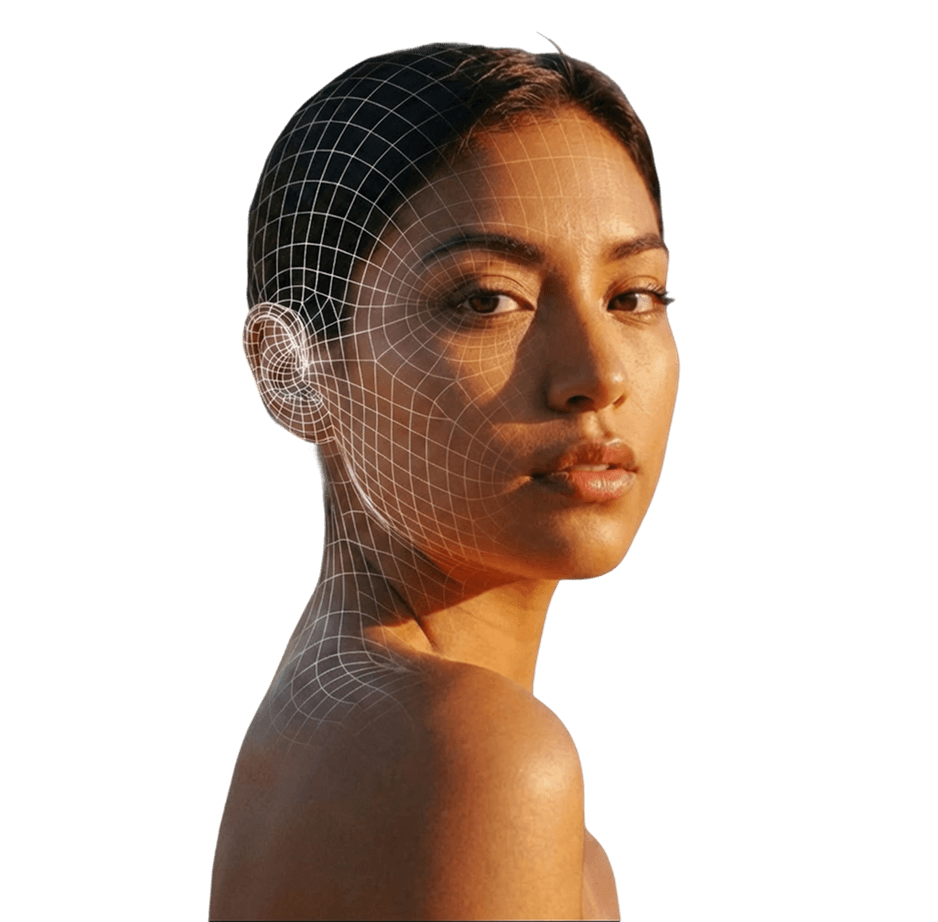
you already know this
you've spent hundreds on products that weren't for you.
Your skin is not an average. It's yours. The products that actually work on it are already working — on someone. You just have no way to find her.
the $90 serum you used twice.
Everyone raved about it. It burned you. It sat in your drawer for six months.
the tiktok routine that broke you out.
10 steps that worked for a 19-year-old in LA. You're not her. Your skin told you.
the sephora staff pick you didn't need.
Commission-driven. Generic. Not matched to anything except what's on promo.
the three cleansers in your shower.
You keep buying because maybe this one's it. It won't be, until someone with your skin tells you.
how it works
three steps. no more blind buys.
01
you take the quiz
6 questions adapted from the Baumann Skin Type Indicator — the same framework dermatologists use. You get your 4-letter skin type.
02
we match you
To the people with your exact type who've already done the trial-and-error — and the products, routines, and outcomes they swear by.
03
you stop guessing
Every rec you see is tied to skin like yours. Every product cites who it worked for. No more buying on vibes.
the app, coming soon
a feed, for the skin in your mirror.
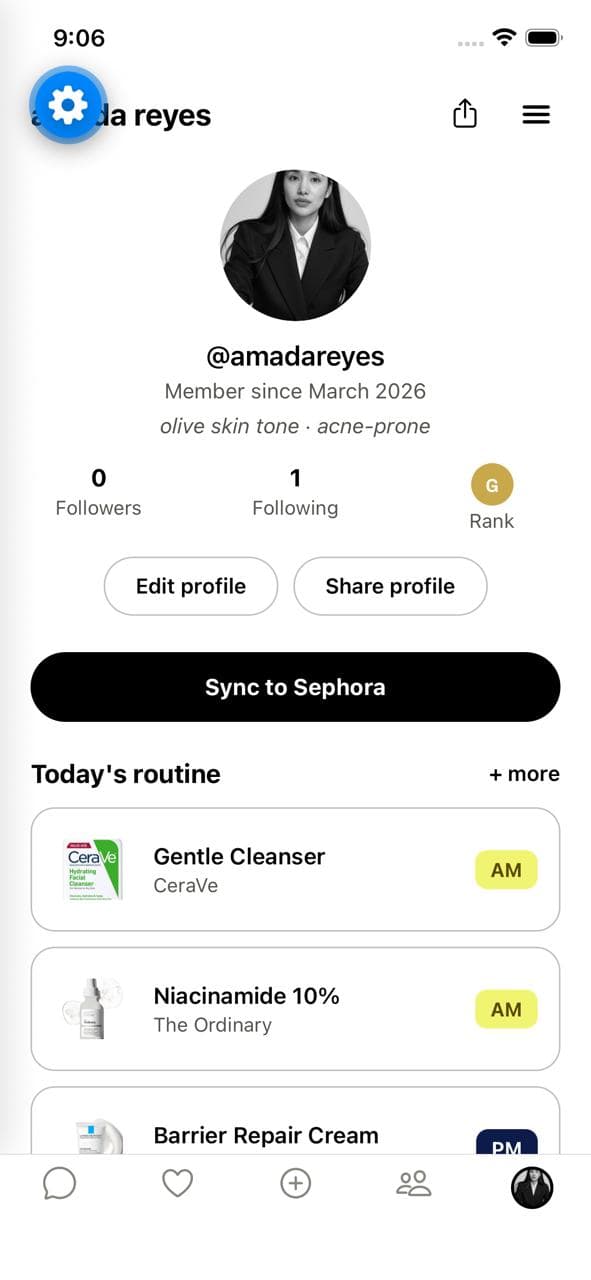
your skin id
Your Baumann type, undertone, and phototype — saved, shareable, matchable.
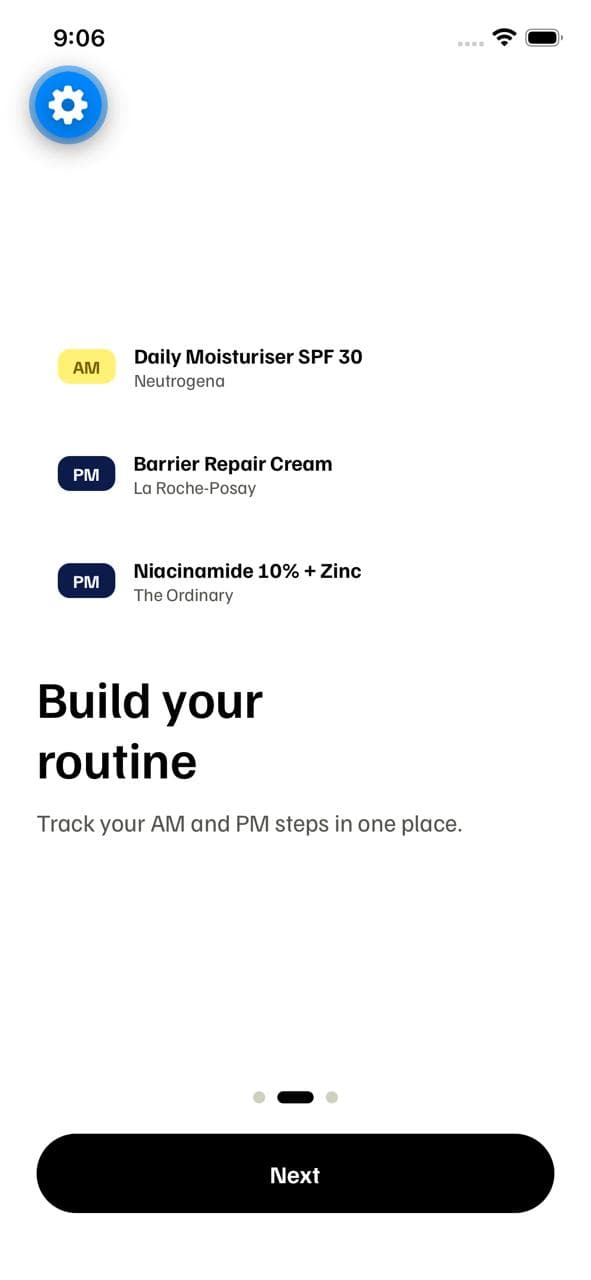
your routine
Build your AM/PM shelf. Track what's actually helping, week over week.
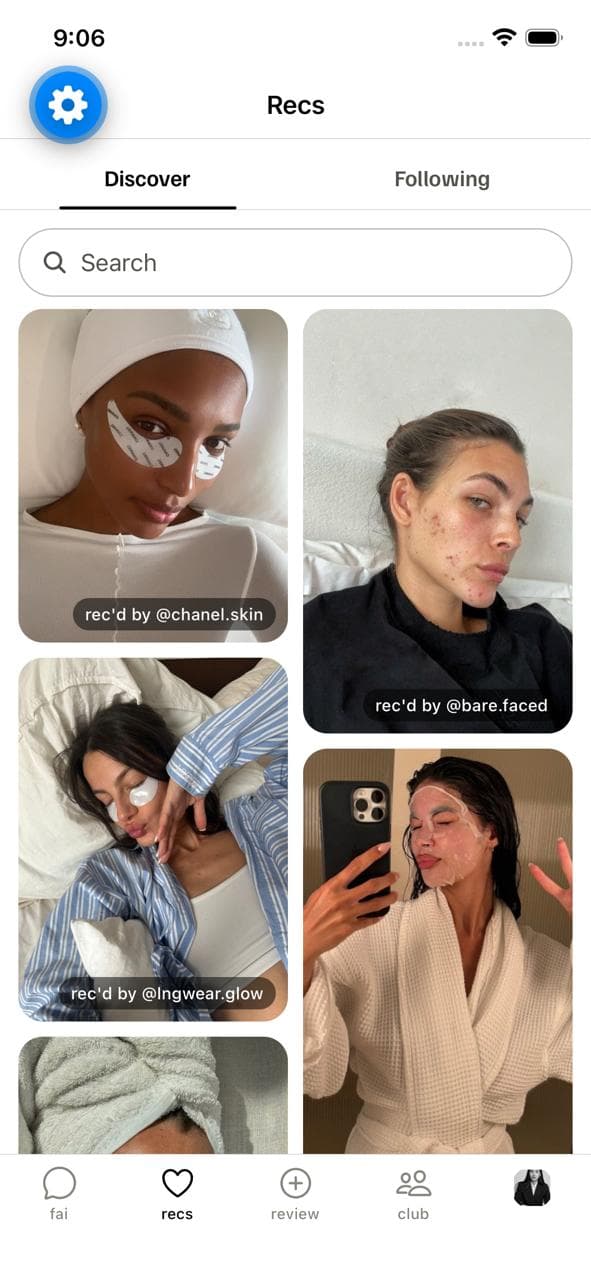
see what worked
Browse the routines and reviews of people whose skin looks exactly like yours.
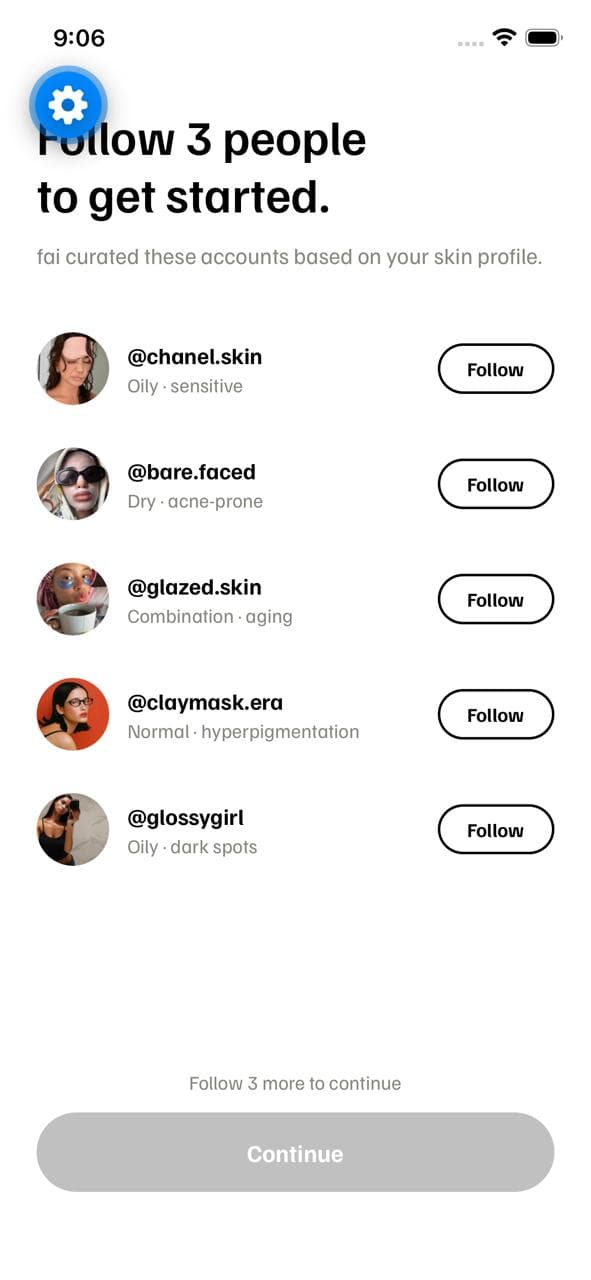
follow your matches
Find your skin twins. Get notified when they review something new.
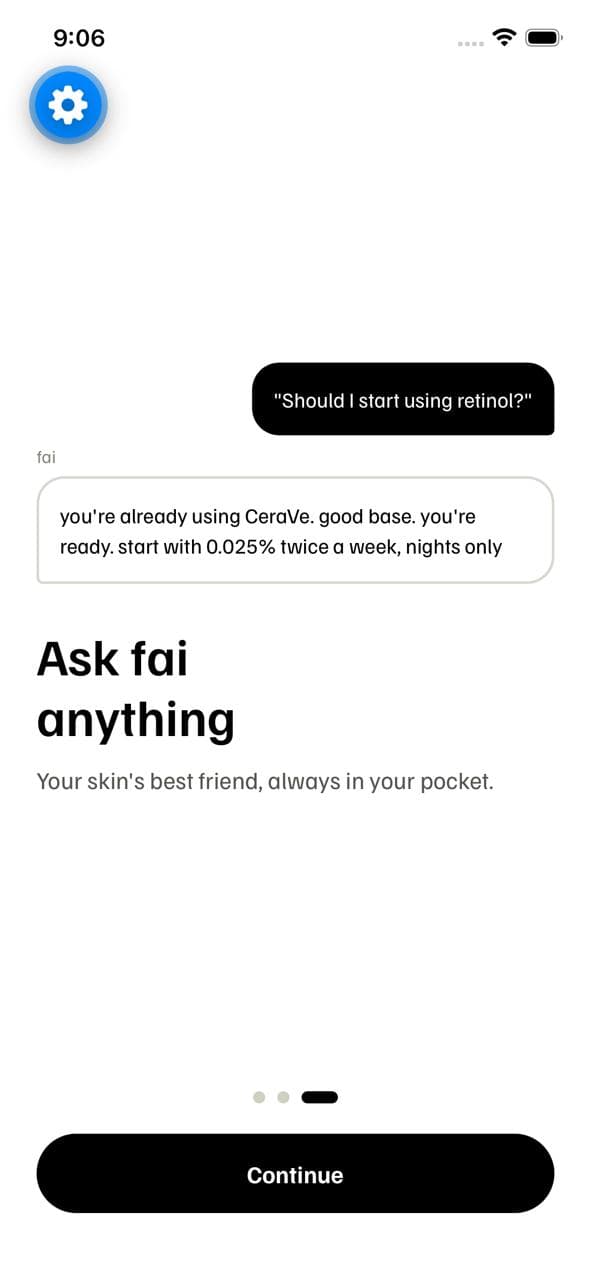
your advisor
an advisor that knows your skin — and everyone who shares it.
fai reads your full skin history and references the community members with the closest match to you. Every answer cites where it came from.
fai is a product-discovery assistant, not a medical device. For diagnosed conditions, see a board-certified dermatologist.
what matching does
the person who solved your skin already exists.
“I'd been on a $400/month routine for two years. Matched with someone with my exact skin type on faces. She was on three products. I switched. My cystic acne cleared in seven weeks.”
“Finally someone said 'your skin is reactive, stop layering actives' instead of 'try niacinamide.' The routine a peer shared was the first thing that didn't make my face sting.”
“I'm 22 and had been spending $150/month on products I'd seen on TikTok. My matches on faces were using drugstore basics. My barrier healed in a month. I feel stupid and also free.”
Quotes from beta community members. Skin types use Baumann four-letter classification (BSTI). Names changed.

why we're building this
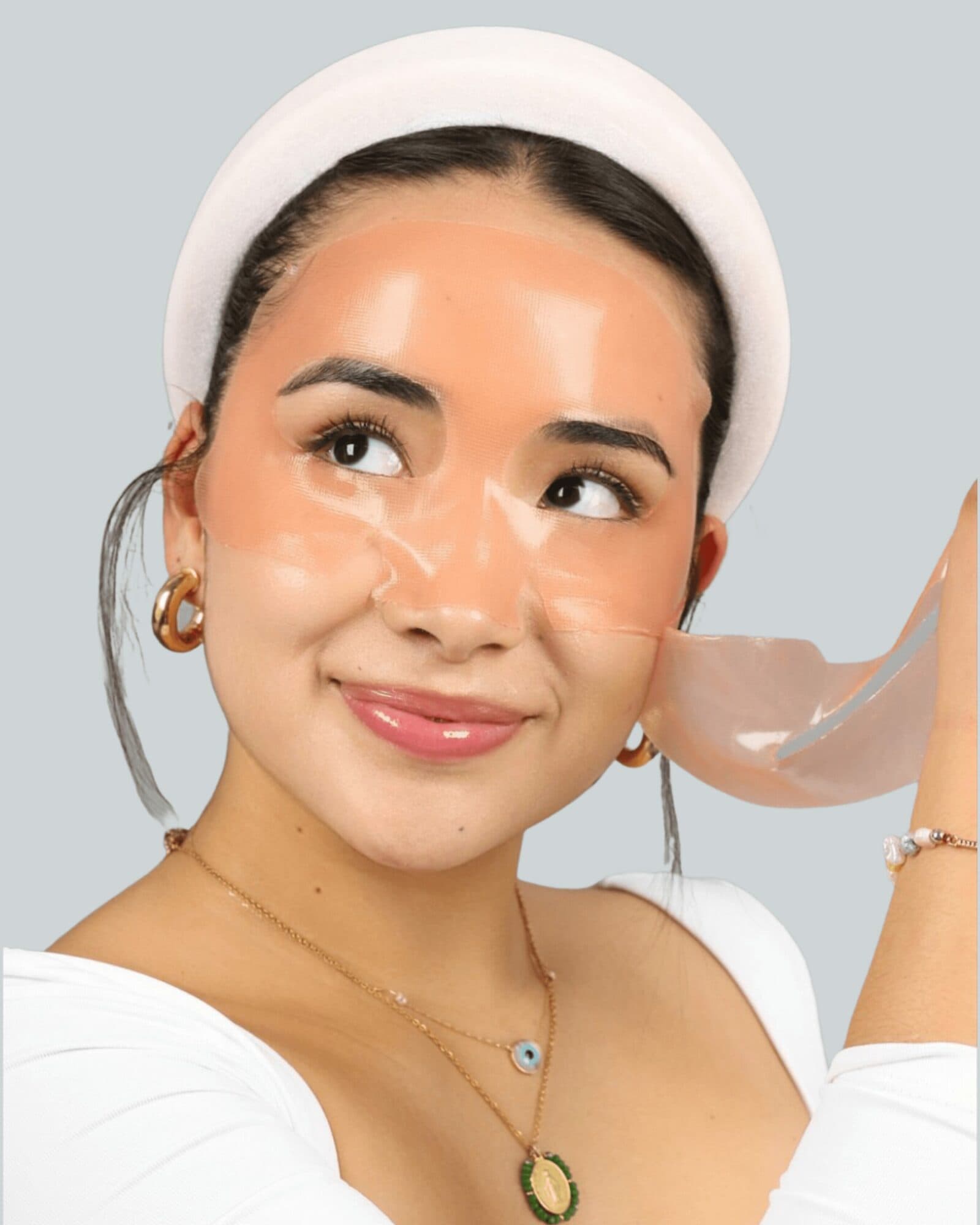
I spent most of my twenties believing my skin was the problem. It wasn't. The problem was that every product was designed for a generic face, sold by someone who'd never met mine. Faces is the thing I wish I'd had at 22 — the person with your exact skin, telling you what actually worked.
— Amada, founder
the receipts
we show our work.
Every match, every recommendation, every skin type assignment is tied to peer-reviewed dermatology research or to a named community member with your exact profile. No vibes. No brand deals hiding as advice.
skin type classification
8 questions adapted from the Baumann Skin Type Indicator (BSTI) — four validated dichotomies: dry/oily, sensitive/resistant, pigmented/non-pigmented, wrinkled/tight.
Baumann L. (2008). Understanding and treating various skin types: the Baumann skin type indicator. Dermatol Ther, 21(4), 328–336. ↗UV reactivity
Fitzpatrick phototype captured separately for UV-reactivity only. We do not use Fitzpatrick as a proxy for skin tone — 2024 JAAD reviews flag it as imprecise for darker phototypes.
Ware OR et al. (2024). Integrating skin color assessments into clinical practice and research. JAAD. ↗peer matching
Matching uses the BSTI 4-letter code plus primary concern. Interpersonal variation in skin phenotype is well-documented; peer similarity is a better predictor of product response than generic labels.
Grice EA, Segre JA. (2011). The skin microbiome. Nat Rev Microbiol, 9(4), 244–253. ↗faces is a product-matching community, not a medical device. Your Skin ID is not a diagnosis. For rashes, suspected rosacea, melanoma-suspicious moles, or persistent inflammatory conditions, see a board-certified dermatologist.
stop guessing at
your own skin.
find my skin match90 seconds · 8 questions · get your validated skin type + peer matches